
Your smile is one of the first things people notice, so it is natural to want it to look its best. When people think about improving their smile, two options usually come up: teeth whitening and veneers. Both can give excellent results, but they do very different things. Choosing well starts with understanding the difference.
What is teeth whitening?
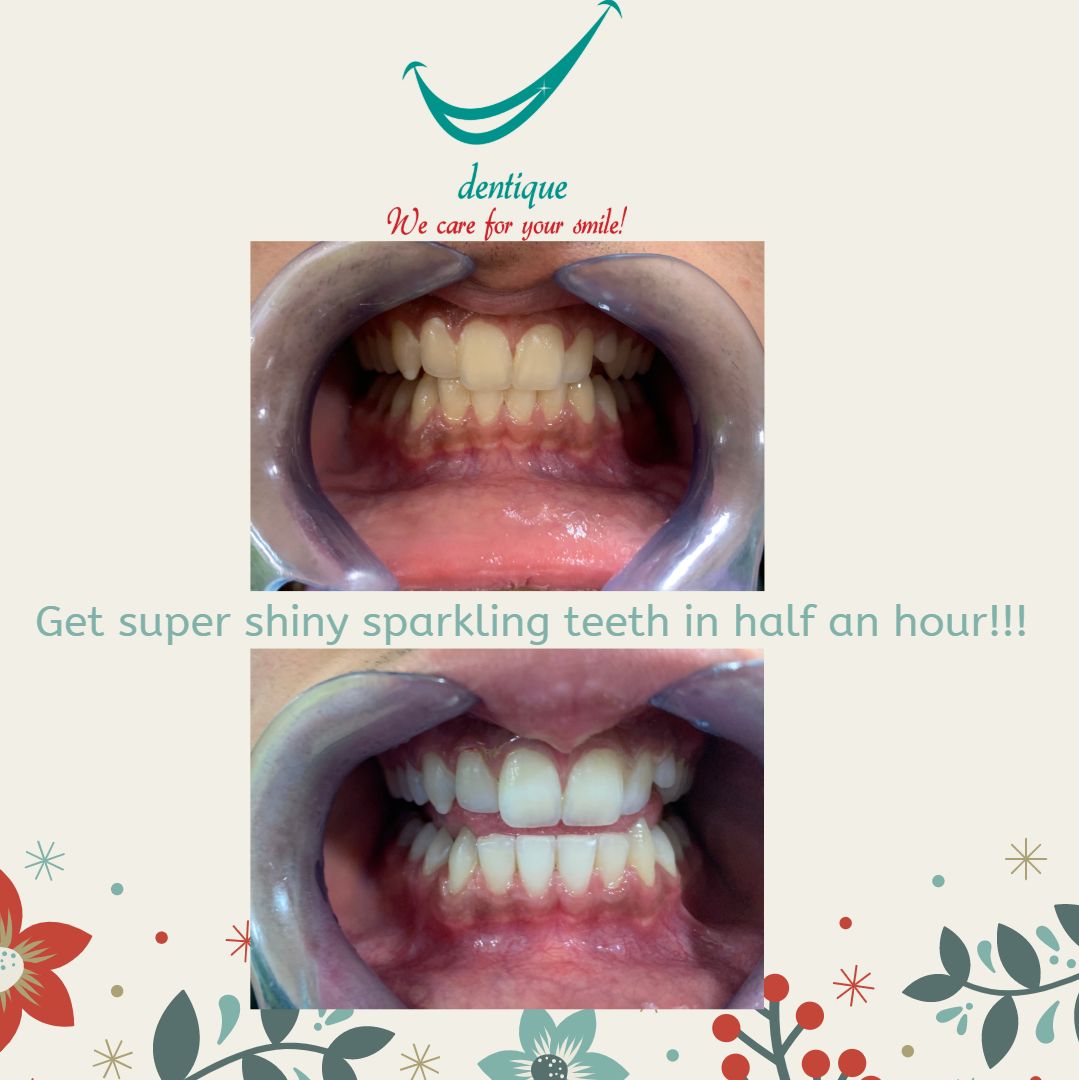
Teeth whitening uses a peroxide-based gel to lighten the natural colour of your teeth and remove stains from tea, coffee, tobacco and certain foods. Professional whitening is done either in the clinic, with the gums protected and a stronger gel used for a shorter time, or at home with custom trays and a gel supplied by your dentist.
What whitening can do:
- Make natural teeth several shades lighter
- Remove most surface and age-related staining
What whitening cannot do:
- Change the shape, size or alignment of teeth
- Fix chips, gaps or worn edges
- Lighten crowns, veneers or tooth-coloured fillings, which keep their original shade
- Fully remove some deep internal stains (for example from certain medicines in childhood)
Temporary sensitivity during or after whitening is common and usually settles within a few days.
What are veneers?
Veneers are thin, custom-made shells bonded to the front surface of the teeth. They are made either from porcelain (ceramic), made in a laboratory, or composite resin, built up directly on the tooth.
Because they cover the front of the tooth, veneers can change colour, shape, length and the appearance of small gaps or slight crookedness all at once. Porcelain veneers usually require a thin layer of enamel to be removed so they sit naturally, which is not reversible. That tooth will always need a veneer or crown afterwards. Composite veneers often need little or no enamel removal.
Veneers vs teeth whitening at a glance
| Teeth whitening | Veneers | |
|---|---|---|
| Changes colour | Yes, of natural teeth only | Yes |
| Changes shape, chips, gaps | No | Yes |
| Tooth structure removed | None | Thin layer for porcelain; little or none for composite |
| Reversible | Colour fades over time | Porcelain: no |
| How long results last | Months to a few years, depending on diet and habits | Composite: often 5–7 years; porcelain: often 10–15 years with care |
| Visits | 1–2 | Composite: 1–2; porcelain: usually 2–3 |
| Cost | Lower | Higher |
Which is better for you?
Whitening is usually the right first step if your teeth are healthy, well-shaped and reasonably straight, and the main thing you would like to change is colour.
Veneers may suit you better if you want to change more than colour: chipped or worn edges, small gaps, uneven lengths, slightly crooked front teeth, or deep stains that whitening cannot lift.
Many people use both: whitening first to brighten all the natural teeth, then veneers on a few front teeth matched to the new shade. If teeth are significantly crooked, straightening them with braces or clear aligners first can mean fewer veneers, or none at all (here is what aligner treatment involves day to day).
Whatever you choose, cosmetic work should only be done on healthy teeth and gums. Read why healthy gums matter more than white teeth.
What about cost?
Whitening is generally the more affordable option. Veneers cost more per tooth, and porcelain more than composite, but they can address several problems at once. The right comparison is cost against what you want to achieve, and an exact quote is only possible after an examination.
Teeth whitening and veneers in Wakad
At Dentique, we start with what you would like to change about your smile, check that your teeth and gums are healthy, and then explain the options honestly, including when whitening alone will do the job. For bigger changes we can plan the result first; see how digital smile design works, or learn more about smile design in Wakad. Our clinics are easy to reach from Hinjewadi, Tathawade and Pimple Saudagar.
Frequently asked questions
Does teeth whitening damage enamel?
Professional whitening used as directed does not damage enamel. Temporary sensitivity is the most common side effect. Overusing whitening products, especially unsupervised, can irritate the gums and increase sensitivity.
Can I whiten my veneers?
No. Porcelain and composite do not respond to whitening gel. If you plan to whiten, do it before veneers are made so they can be matched to your lighter shade.
Are veneers permanent?
Porcelain veneers are a permanent commitment because enamel is removed, although each veneer may eventually need replacing. Composite veneers are more conservative but need more maintenance.
Book a visit at Dentique, Wakad
Dentique – Mankar Chowk
Shop No. 7, Sonigara Laurel, Ground Floor, beside Sujata Mastani, Mankar Chowk, Kaspate Wasti, Wakad, Pune 411057
Phone: +91 79039 45606 · Get directions
Dentique – Pink City Road
Shop No. 9, Palash Plus, Pink City Road, opposite Gold’s Gym, Wakad, Pune 411057
Phone: +91 97428 07286 · Get directions
Open Monday to Sunday, 10 am – 9 pm · Email: dentique.smiles@gmail.com · Book an appointment online
This article is general information and does not replace a dental examination. If you have pain, swelling or other symptoms, please see a dentist.